This is a photograph of the universe at 380,000 years old.
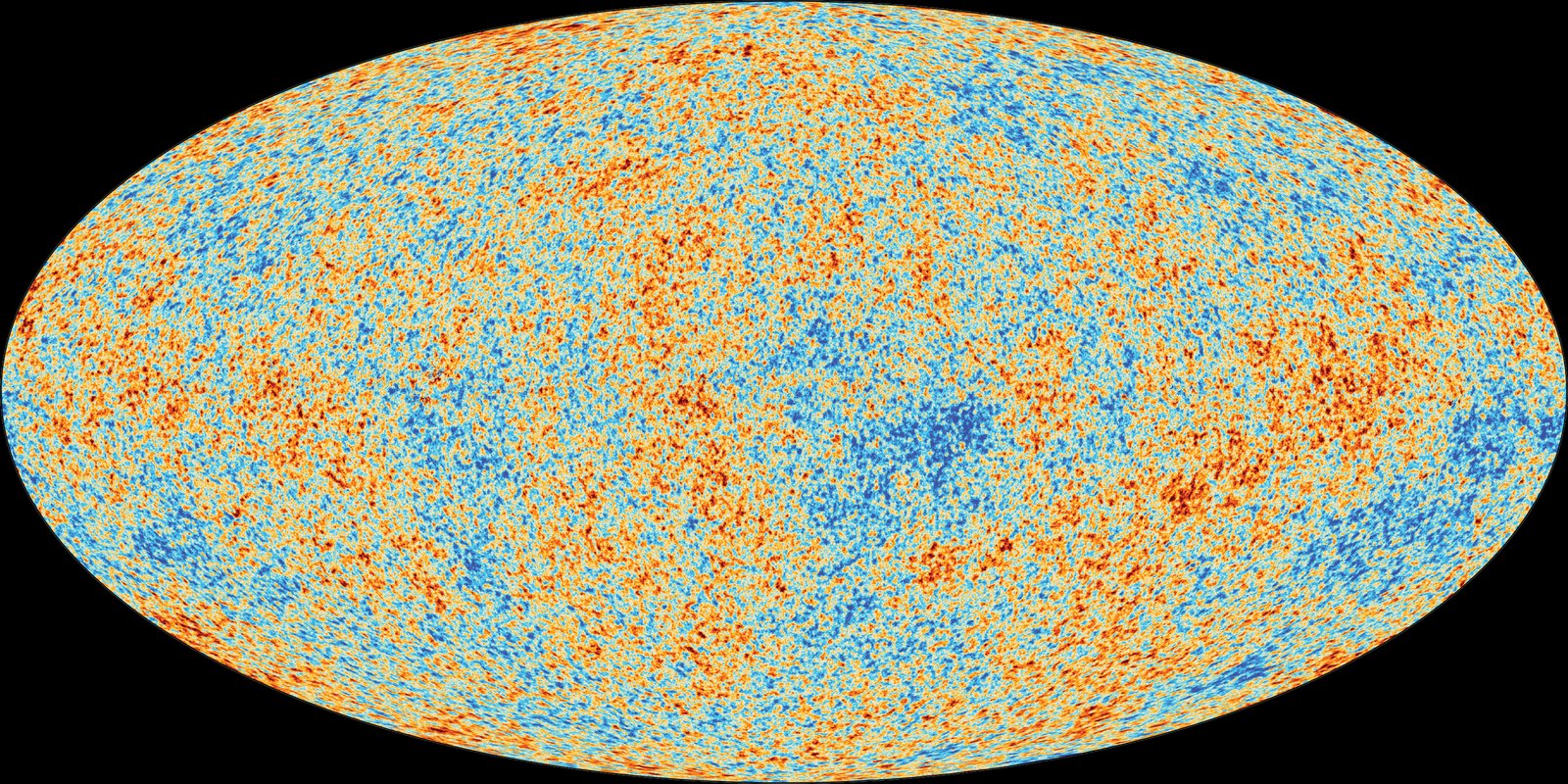
ESA / Planck Collaboration / 2018 legacy releasegalactic coordinates, Mollweidelight received here: now
The temperature of the oldest light, today.
2.7255 K
About 0.0001 K warmer or cooler, depending where you look.
That tiny difference became everything you can see.
Minus 270 degrees. Planck's detectors were cooled to a tenth of a kelvin so that their own warmth would not drown it.
We exaggerate the differences so you can see them. Those differences were enough.
Try to look earlier.
Before about 380,000 years, the universe was a plasma. Free electrons scattered every photon within a short distance, so light could not travel. When atoms formed, it could. This map is that moment.
Drag toward the beginning.
You cannot look farther with light.
It is behind everything you see.
The light comes from every direction at once. Whatever you are facing, it is there, past the last star.
How the picture came into focus.
- 1964Arno Penzias and Robert Wilson, Holmdel, New Jersey: an unexplained microwave signal from every direction, about 3 K, that would not go away.
- 1978Nobel Prize in Physics.
- 1989COBE launches. 1992: the first map of the fluctuations, at 7° resolution.
- 2001WMAP launches. Resolution 0.2°. The age of the universe measured to about 1%.
- 2009Planck launches. Resolution 5 arcminutes. Final maps released 2018.
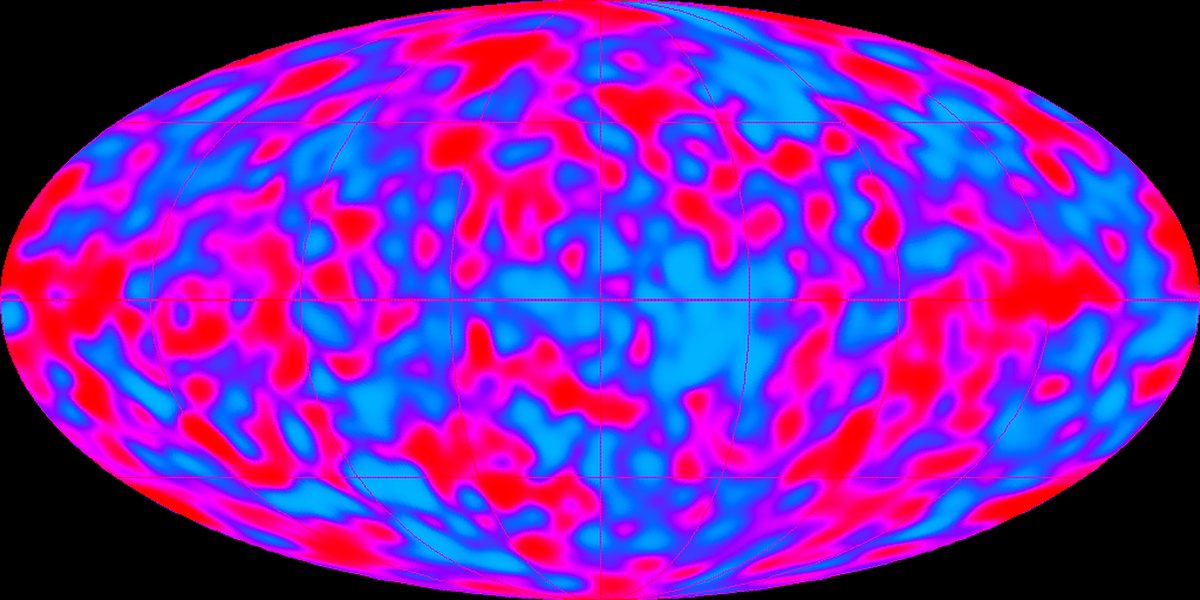
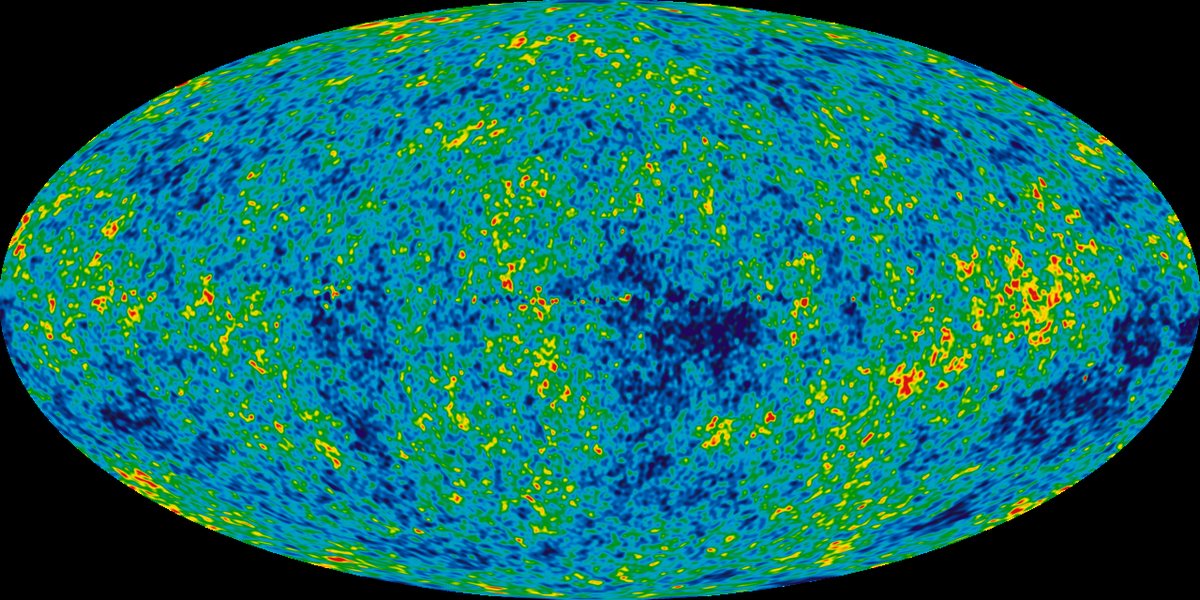
Tap one to see it above.
COBE: NASA / COBE Science TeamWMAP: NASA / WMAP Science TeamPlanck: ESA / Planck Collaboration
ESA / Planck Collaborationl 0° at centre · b +90° at topT₀ = 2.7255 K
You are looking at the oldest light you can see.
It left when the universe was about 380,000 years old.
It arrived while you were here.
Look up.